

As Self-Care Awareness Month comes to a close Sept. 30, the wellness industry continues to sell consumers the idea that feeling better can be bought. From $80 scented candles to luxury spa retreats, much of the mainstream conversation around wellness still treats self-care as something to purchase, schedule or display.
But for Black women building businesses, educating communities and carrying responsibility across multiple roles, the question is often bigger than whether there is enough time for a massage. What happens when a woman has spent years being praised for how much she can carry?
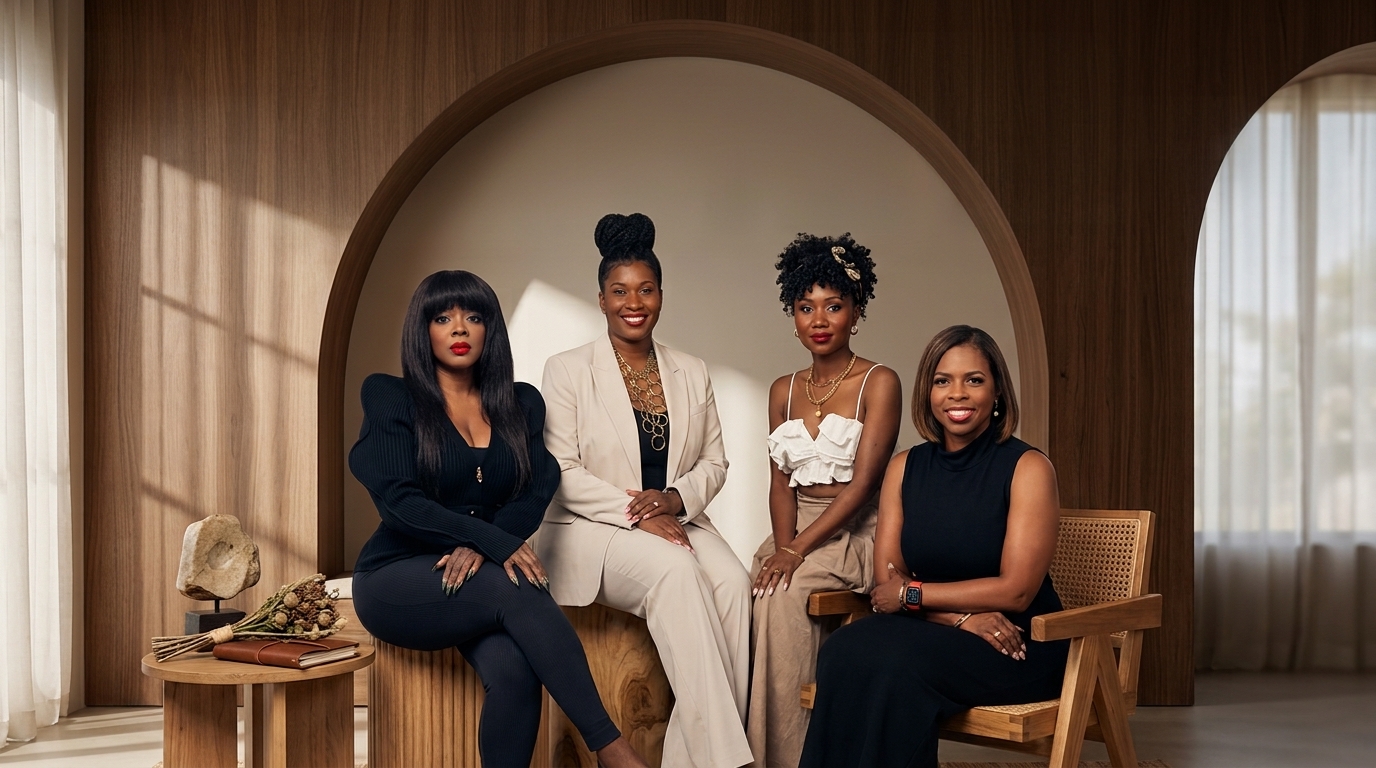
Sometimes self-care means saying no. Sometimes it means logging off, making the appointment you’ve been avoiding or getting outside long enough to remember that life exists beyond the screen. For Angel Neely-Allen, Lisa Jean-Francois, Tameka Jackson-Dyer and Melky Jean, taking care of themselves means recognizing that being capable does not require being constantly available.
What Does Self-Care Look Like When Peace Comes First?
Angel Neely-Allen, an experienced Montessori educator, entrepreneur and public speaker, has learned to treat peace as a boundary rather than a reward.
As the founder of For Kids’ Sake Montessori, which operates campuses in Southfield and Detroit, Michigan, Neely-Allen works in early childhood education, mentors others and manages the demands of entrepreneurship. For her, self-care means making room for the parts of life that exist outside of work.
“Self-care for me goes far beyond the physical. I’m intentional about putting myself first and making my needs a priority—my health, my wealth, my spiritual well-being, and even my desire to travel and experience life,” Neely-Allen explained. “At this stage of my life, I choose what brings me peace, purpose, and joy. If it costs me my peace, I simply don’t do it—and I make no apologies for that.”
That philosophy requires more than occasionally stepping away from work. It means recognizing when a demand, obligation or relationship no longer deserves access to her time and energy.
View this post on Instagram
For women accustomed to being available to everyone else, that kind of boundary can be its own form of care.
How Does Lisa Jean-Francois Get Off the Speed of the Internet?
Lisa Jean-Francois knows what it means to build a life in public.
The Boston-area digital creator, entrepreneur and advocate became widely known as a lifestyle influencer before shifting her focus toward conscious parenting, fashion for women over 40 and autism advocacy. Through “Her Seat Saved” and her jewelry venture under Consciously Lisa, Jean-Francois continues to balance entrepreneurship, content creation and family life, including homeschooling her neurodivergent children.
But when the digital noise becomes too loud, her answer isn’t another productivity hack.
She goes outside.“
“Living in New England, I’ve learned that my peace is directly tied to the land beneath my feet,” Jean-Francois shared. “When the noise of the digital world gets too loud, I step outside and let nature reset me. Walking through the woods, breathing in the crisp air, and listening to the stillness of the trees reminds me that I don’t have to exist at the speed of the internet. Grounding myself in nature is how I reclaim my rhythm, my clarity, and my spirit.”
&
View this post on Instagram
That distinction matters in a culture that can make constant visibility feel like a requirement for relevance.
For Jean-Francois, stepping away from the screen isn’t stepping away from her work. It’s a way to remain connected to herself while doing it.
Why Can Doing the Hard Thing Be Self-Care?
For Tameka Jackson-Dyer, self-care doesn’t always feel good in the moment.
The maternal health advocate and public health leader, previously featured in AUNTIE, holds BASc, IBCLC and CHW credentials, serves as Executive Director of Southeast Michigan IBCLCs of Color (SEMI) and is known in Detroit as “The CrazyMilkLady.” Her work has centered on lactation support, maternal health and addressing disparities affecting Black mothers and families.
With nearly two decades of work behind her, Jackson-Dyer has developed a definition of self-care that doesn’t necessarily involve stepping away from a problem.
Sometimes, she says, taking care of yourself means dealing with it.
“Sometimes self-care is not stepping back from things but leaning into them,” Jackson-Dyer stated. “You may need to do the thing that you don’t want to today so that future you can rest. Make the doctor’s appointment, have the hard conversation—that’s also self-care.”
There’s something particularly practical about that definition.
Self-care can be the appointment that has been sitting on the calendar. It can be the conversation that keeps getting postponed. It can mean handling a problem before it becomes bigger.
For women carrying businesses, families and communities, sometimes the rest comes after the responsibility—not instead of it.
What Does Self-Care Look Like for a Woman Who Finds It at the Beach?
For Grammy-nominated Haitian-American singer, songwriter, humanitarian and entrepreneur Melky Jean, self-care can be as simple as getting close to the water and staying there long enough to exhale.
Jean, whose career includes music featured in projects such as Love Jones and HBO’s Disappearing Acts, also serves as CEO of Saint Sauveur 1972 spirits and founder of The Carma Foundation.
When she needs to reset, she heads to the beach.
“When I need to realign myself, I return to water. We’re made mostly of water, and being close to the ocean does something for me,” Jean shared. “That’s when I go to the beach—usually around 3, when the sun is still warm, and I stay until sunset. I breathe, feel the sand under my feet, and step into the salt water. I’m not a swimmer, but the sun, the sand, and the ocean all feel healing to me.”
View this post on Instagram
There’s no complicated routine in that description. No elaborate wellness regimen. Just time, water, sunlight and enough stillness to hear herself again.
For Jean, that physical reset creates space to return to the work without allowing the work to consume every part of her.
What Black Women Know About Choosing Themselves
The wellness industry has made self-care easy to package. There is always another product, retreat, treatment or ritual promising to help people feel restored.
But the women in this story describe something less polished and, in some ways, more demanding.
Neely-Allen protects her peace. Jean-Francois steps away from the internet. Jackson-Dyer handles what needs to be handled today so tomorrow can be lighter. Jean returns to the water and stays until sunset.
None of those choices require permission.
For Black women who have spent years being dependable, capable and available, choosing yourself can require something more difficult than buying another thing. It can require deciding what no longer gets access to your time, your energy or your peace.
Because being able to carry everything does not mean you were meant to carry it all.
RELATED CONTENT: Cynthia Bailey Learned Peace And Growth Come With Getting Older…Amen


